Selected Publications
A chronological selection of books, research articles, and book chapters on security, politics, and sociology.
FEATURED BOOK
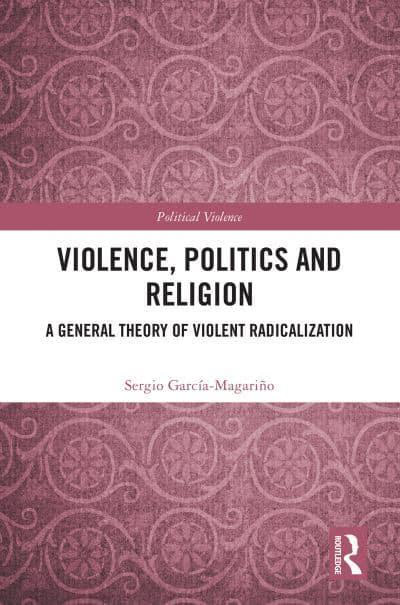
Violence, Politics and Religion: A General Theory of Violent Radicalization
A definitive study on the structural limitations of global security architectures in the 21st century.
Other Books
Real-time political experiments: collaborative governance in Gipuzkoa
This monograph aims, on the one hand, to establish a theoretical framework for understanding and explaining governance. This is condensed mainly in the initial chapter, reviewing, first, the global literature on governance and, second, proposing an operational way of approaching it that can serve to design interventions on politics. On the other hand, however, the monograph has sought what in process tracing is called theoretical refinement through the illustration of theory using practical cases. Governing well today is fundamental to responding to the unusual challenges facing humanity.
Challenges of the United Nations collective security system: sociological analysis of its efficiency in the face of global threats
This book covers some of the key global dynamics of our age. It aspires to assist the non-specialized reader, as well as the specialized one, to understand the world we live in, the forces that affect our coexistence, the trends that will shape our future and the promising avenues for peace and prosperity. Globalization, collective security, the connection between human rights, development and peace will be some of the concepts upon which the book aims to shed some light in a rigorous but a didactic manner. In addition, those complex cases that rarely are explained in the divulgative media, such as the functioning of the United Nations and its mechanisms for conflict resolution, Daesh and Al-Qaeda, the Palestinian conflict, the Arab Spring, the wars of Iraq and Afghanistan and the violence in Afrika will be examined balancing the details with the need to be pedagogical. In brief, this work is an attempt, on the one hand, to describe and explain the forces and threats that were present and contributed to the upsurge of coronavirus pandemics, such as climate change and the exploitation of nature and, on the other, to set some hopeful paths and to inform policies to rearrange our order: if social dynamics are global, global should be our political governance too. Finally, the book approaches, from an innovative and enlightening manner, the ins and outs of the Russian aggression to Ukraine.

Violence, politics and religion: A general theory of violent radicalization (Spanish Edition)
An indispensable work that rigorously and deeply addresses cases of religiously inspired violent radicalization in Spain and around the world. "Sergio García-Magariño's new book is broad, important and original... It is an indispensable work for both those concerned with violent radicalization in Spain and readers who have a general theoretical interest in the phenomenon" (Sidney Tarrow).

Freedom of thought, conscience and religion and violent radicalization: situation and solutions
This book explores the intersection between freedom of thought, conscience and religion and the prevention of violent radicalization, proposing structural and educational solutions.
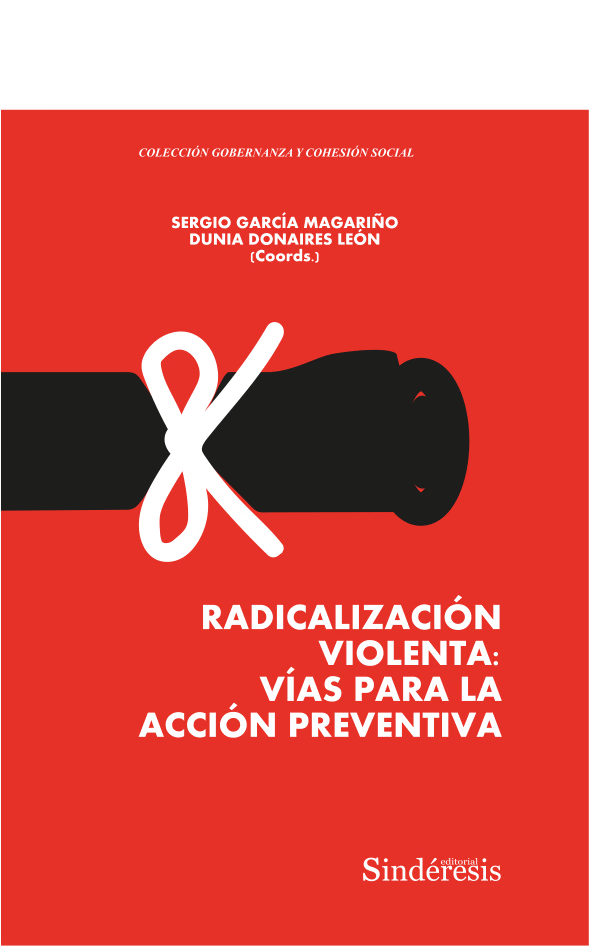
Violent radicalization: paths for preventive action
The phenomenon of violent radicalization, specifically that of jihadist inspiration, is a complex problem that requires deep and nuanced multidisciplinary analysis to avoid falling into common reductionisms. This book proposes an integral and balanced look to analyze the micro, meso and macro-social factors of radicalization and propose applied and viable prevention mechanisms in public policies.
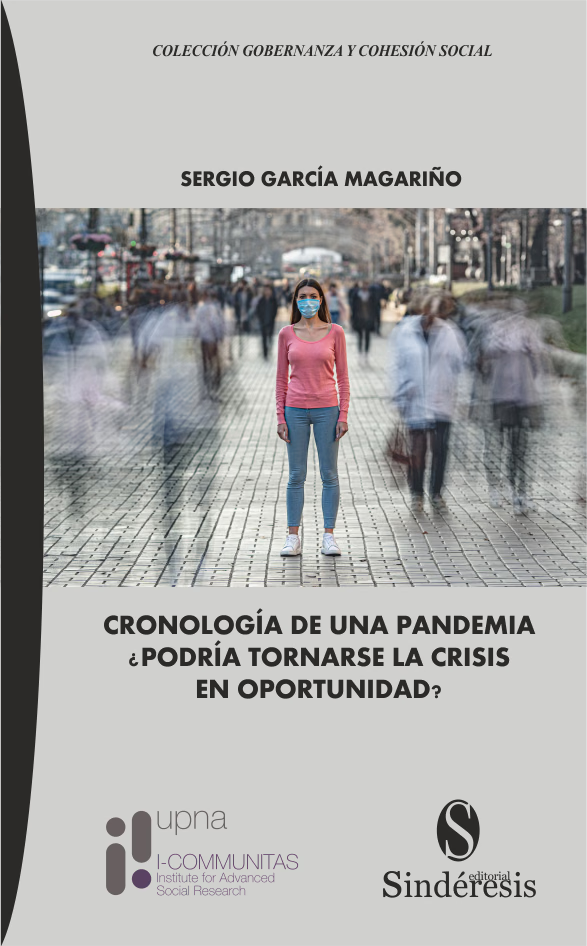
Chronology of a pandemic: could the crisis turn into an opportunity?
This work is born as a timely exercise of reflection and sociological analysis on the global health crisis caused by COVID-19. Far from being limited to a temporal chronicle of events, the author proposes that this pandemic constitutes a critical juncture and an unparalleled opportunity to reorganize the political, economic and social structures that govern our world in a rational, ethical and equitable manner.
Social and economic development: a holistic approach
This volume explores social and economic development from a holistic perspective, combining sociological theories with economic development indexes.

Introduction to the sociology of crime
This work revolves around the sociology of crime and is part of a broader collection of monographic manuals on Criminology and Criminalistics. It aims to serve as reference material for students, professors, researchers or the general public desirous of deepening their understanding of the concepts, theories, methodologies and main areas of study developed by sociology to explain crime.
Challenges of the UN collective security system: sociological analysis of global threats
This work analyzes the effectiveness of the UN collective security system in the face of certain global threats, such as international terrorism, political violence within national territories or wars between States. It explores the globalized processes of security and the challenges of the international order.
Governance and religion
This collective work is the second in a series of publications related to the search for more effective models of governance, within the context of a transforming society, coordinated by the Office of Public Affairs of the Bahá'í community of Spain. Personalities from different fields identify good practices transferable to politics.
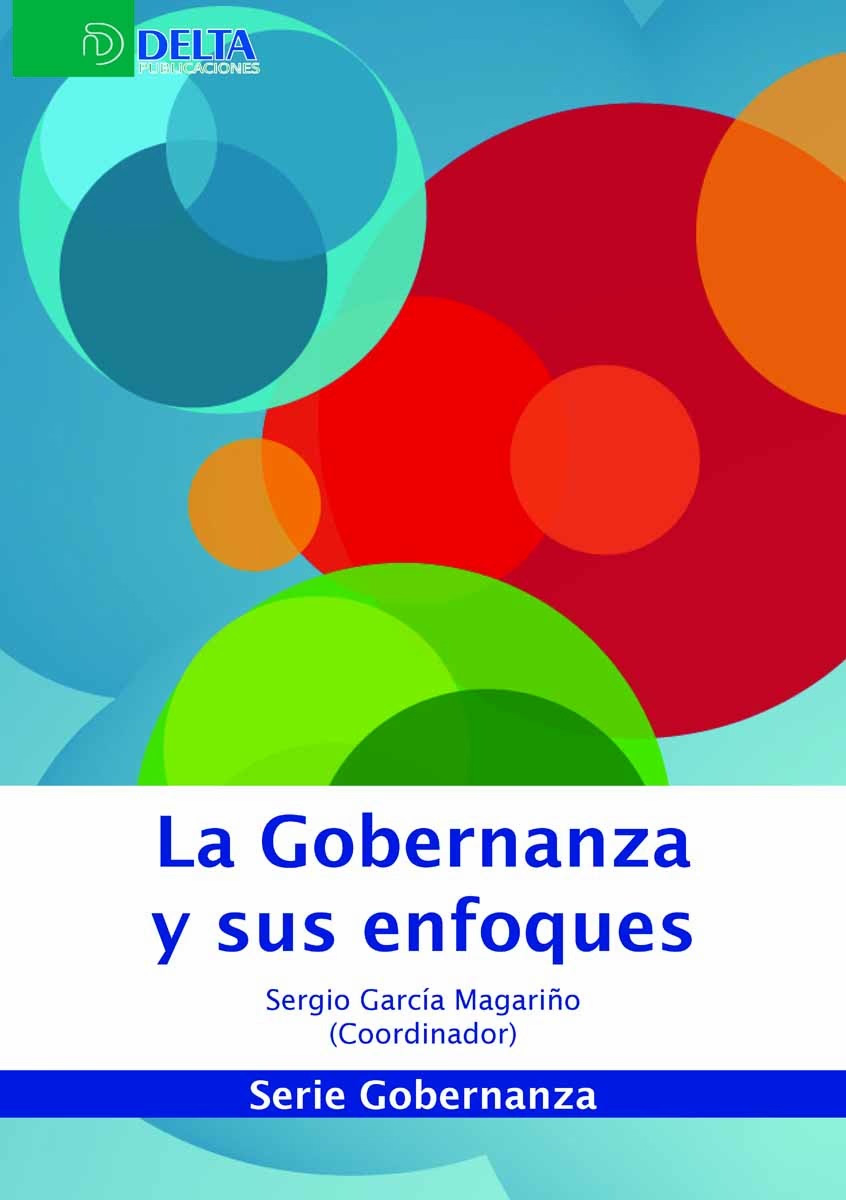
Governance and its approaches
Good governance is essential for social progress. Although governance is commonly equated with government, it actually implies much more. Governance occurs at all levels and encompasses the ways in which formal government, non-governmental organizations, community organizations, and the private sector manage affairs and resources.